

// THE WALL //
Your voice has a price.
259 followers
Your voice has a price.
259 followers
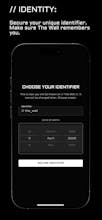
A single global feed where every post costs more than the last. Permanent. Public. Paid. No ads. No edits. No escape. Would you pay to be heard? A social experiment in voice, value, and silence. Available now on iOS.




// THE WALL //
@melnikoff Great question!
Only the author pays to post — readers scroll completely for free.
There’s no way to earn money from posting; in fact, that’s the point.
It’s not about monetizing content — it’s about giving your words weight.
You’re not chasing clicks… you’re choosing when it’s worth speaking.
@robert_meiring It's like the media for the rich. If you have money, you talk, and if you don't have money, you listen. What's the point of paying for my posts, besides the fact that I won't want to talk in vain? Maybe the publications get some kind of high organic reach, or do you promote them somewhere for a portion of the profit received from the author of the post?
// THE WALL //
@melnikoff Great question — and you’re absolutely right to bring that up.
The Wall is intentionally not about boosting or promoting posts for reach.
There are no algorithms, no ads, and no pay-for-exposure — every post is treated equally, whether it cost Ø3 or Ø300.
The idea isn’t to reward the loudest or richest — it’s to create a space where saying something means something.
When there’s real cost, people choose their words more carefully. That’s the experiment.
And anyone can scroll freely — no paywalls, no barriers to watch it unfold.
Raycast
// THE WALL //
@chrismessina 💀
Product Hunt
This reminds me of the million pixel website, and I love it. Brilliant.
// THE WALL //
@rajiv_ayyangar Thank you! That’s an awesome comparison — a limited space, rising stakes, and a bit of internet history baked in.
Really glad you’re into it 🙏
This is such a wild and deep concept. Makes you think before you speak — literally. Love the ‘no edits, no escape’ idea. Curious to see how it evolves. Respect for building something so different!
// THE WALL //
@iam_saurabh Thank you so much — that means a lot 🙏
That’s exactly the feeling we hoped to spark: slow down, think twice, and make it count.
Excited to see where it goes too — really appreciate the support!
Just raising a thought for discussion: Doesn't this create yet larger gap between the voice volume between the rich and the not so?
// THE WALL //
@fullstack_x Yep, it definitely does — and that’s kind of the point. It’s a bit of a social mirror, showing what happens when money equals voice. Unfair? Totally. But also weirdly fascinating to watch.
@robert_meiring You should add a crowdfunding feature to see how willing people are in funding a voice.
// THE WALL //
@fullstack_x Noted.
// THE WALL //
@mohammad_ali_sheikh Totally fair — it’s not for everyone. But that’s what makes it fun: watching people pay real money to post weird, dramatic, or unhinged stuff.
JDoodle.ai
Very interesting. I'm just curious: All SM platforms encourage users to create more content so their audience has variety and more reasons to stay on the platform. By restricting content creation, you are reducing consumption and app use. From a business perspective, this looks like self-cannibalisation.
// THE WALL //
@gokuljd That’s a sharp observation — and you’re right, it’s the opposite of how traditional social media works.
But that’s intentional.
The Wall isn’t trying to maximize time-on-app or dopamine loops. It’s flipping the model: less content, more meaning. Every post is a decision. Every scroll has weight. And ironically, that scarcity makes people more curious, not less — “What did someone pay to say now?”
From a business angle, it's not about scale; it’s about value density. So yeah — it’s self-cannibalisation of the old model… on purpose.
JDoodle.ai
@robert_meiring sounds good. All the best.