In a break from the usual building updates for @Meet-Ting, I ve been trying to find the time to write this piece up as I care about it a lot. It feels important - and timely - and valuable for the PH community.
Two weeks ago I saw Yuval Noah Harari at the Barbican. I love his work, and as I ve got older I ve become more learn from history.
Please share one real story. What broke, how did you spot it, how much did it cost, and what did you change so it can t happen again? Keep it simple and honest. I ll read every reply today and post a short checklist of fixes tomorrow.
I've tried dozens of AI presentation tools. The pitch is always the same: "Create stunning slides in seconds!" But here's what actually happens: You get a decent first draft, then spend hours fighting with the tool to make basic edits.
App Store Optimization (ASO) is crucial for an app's success. Many people believe that simply using the right keywords is enough, but that's not the whole story of success.
Keywords play a significant role in app visibility, as they help users discover your app. However, proper keyword placement is even more important. You need to use keywords in the app title, subtitle, promotional text, and description in a way that sounds natural and meaningful.
Anyone building voice AI agents knows how hard it is to stay up-to-date with the latest text-to-speech voice models.
We spend time testing and experimenting with all of the available paid and open-source text-to-speech voice AI models and consolidated our own notes and experience testing different models into a single guide for developers evaluating multiple models.
Anyone building voice AI agents knows how hard it is to stay up-to-date with the latest text-to-speech voice models.
We spend time testing and experimenting with all of the available paid and open-source text-to-speech voice AI models and consolidated our own notes and experience testing different models into a single guide for developers evaluating multiple models.
Posting here to get some validation (and criticism) for a product idea, but not sure if it's too niche or too technical - it's coming from a personal need so it's hard to validate it objectively. Feel free to criticize or suggest things; would love to hear feedback from this community!
Core Product:
An accounting software that let's you have multiple journals, which are stored in local files, with non-proprietary formats.
All founders and builders will have something break at some point. For us at @Finden, it was when we grew from 10 to 100 users. The data was coming in faster than expected, and our queue to process and understand it quickly became overloaded. This meant onboarding slowed down. It was frustrating at the time, but it taught us a vital lesson: always design for scale, not just for your current users.
We ve since re-architected parts of the system to handle growth much more smoothly. But that first break was a reminder that scale is the ultimate stress test.
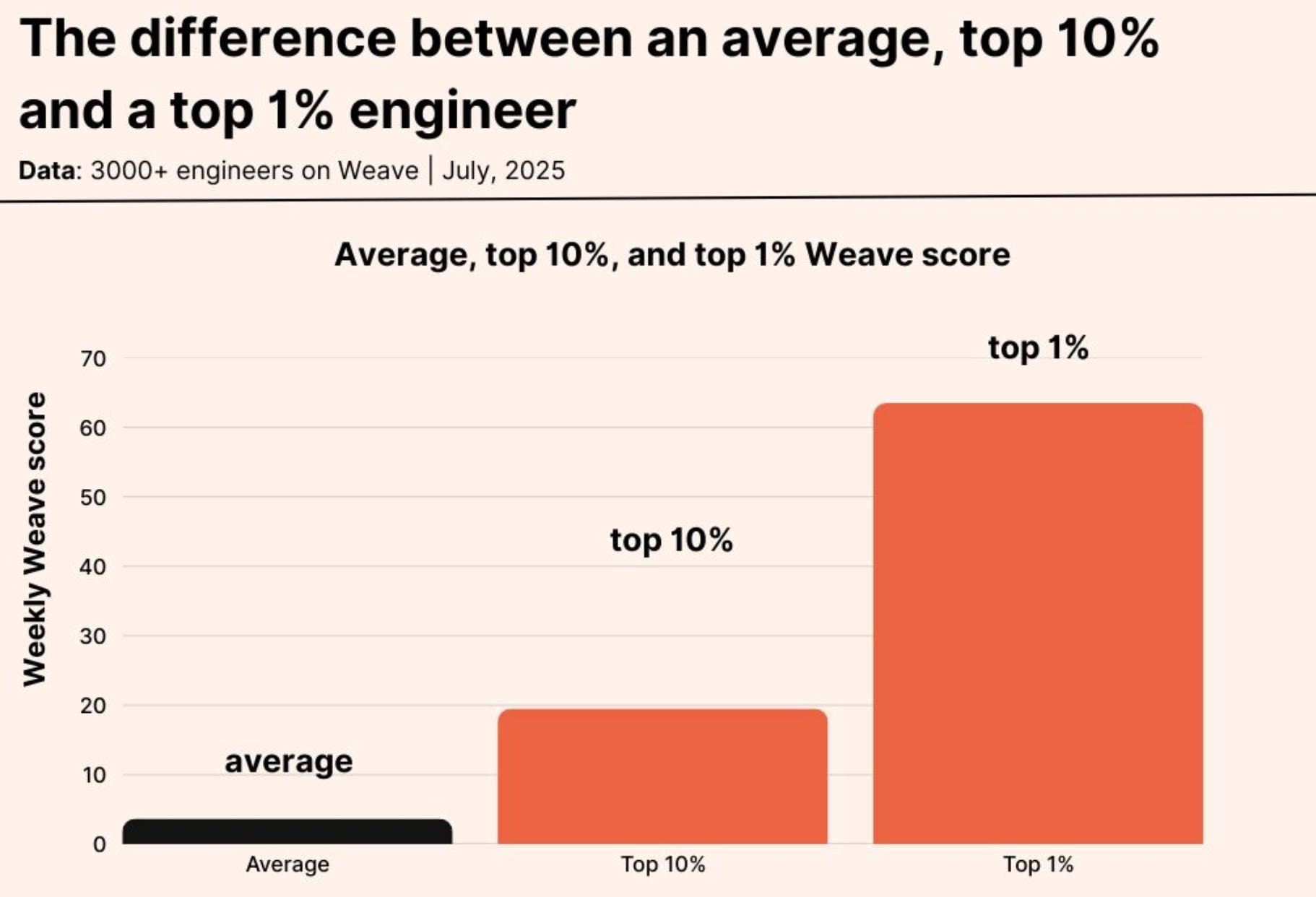
Adam Cohen is the cofounder of @Weave , an engineering analytics company that helps teams go AI-first. Before Weave, he was head of operations and sales at education software firm Top Hat and VP of operations and revenue at @Causal , which was acquired by Lucanet in 2024.
Adam Cohen is the cofounder of @Weave , an engineering analytics company that helps teams go AI-first. Before Weave, he was head of operations and sales at education software firm Top Hat and VP of operations and revenue at @Causal , which was acquired by Lucanet in 2024.
The majority of SaaS startups and product launches these days are AI apps. And for established products, every vendor is throwing an AI chat integration into their existing app and changing their marketing language to advertise it as an AI powered app.
Do new products that don't advertise as AI-powered still have a chance? The product I'm going to be launching does not have any user-facing AI functionality, although AI is used in a limited capacity on a part of the backend. Do I need to advertise this use of AI to even have a chance?